The Anasazi
Jump down to the reading questions.
Some background
Diamond points out that the first indigenous people in the New World were hunter gatherers. But eventually some of the crops and practices of agriculture developed in Mexico made their way to the region currently known as the Southwest of the United States, where the Anasazi peoples lived, and they gradually became farmers.
Successful farming can support a larger population density than hunting and gathering. The Ansasazi practiced..
Dryland farming = cultivating crops without irrigation.
The Southwest is very dry, but there are streams, and near a stream the water table, which is close to the level of the water flowing in the stream, can be close enough to the surface to be a source of moisture for growing plants.
Before they started farming, there would have been many wild plants and even trees in the...
Riparian zones = transition zones between a stream and higher uplands.
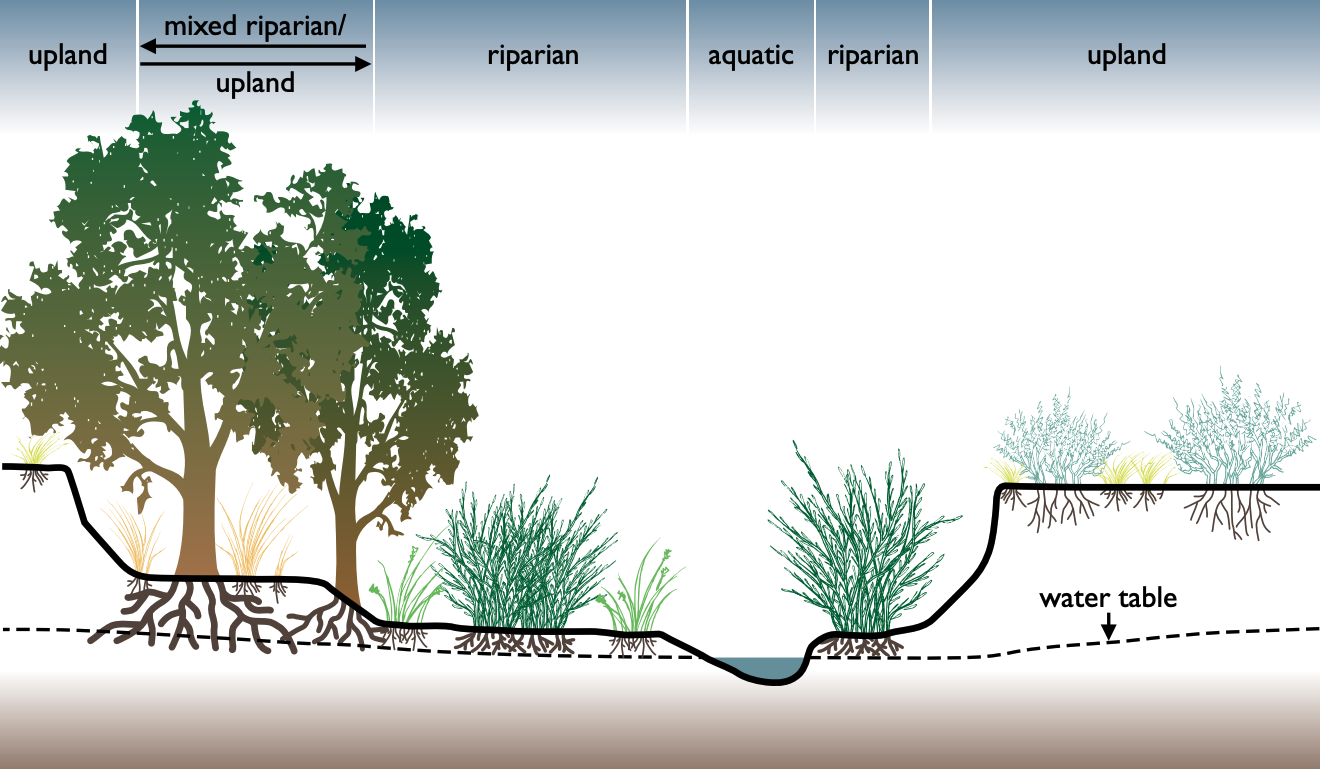
Wikimedia commons

"The impacts of stream degradation" @ 0:48
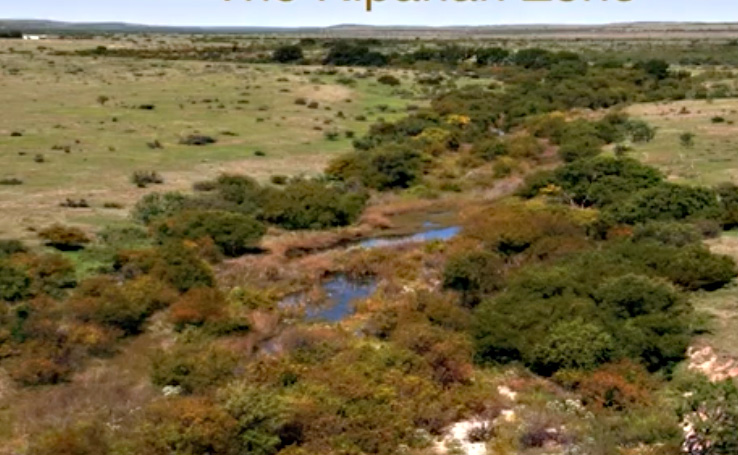
@ 1:18
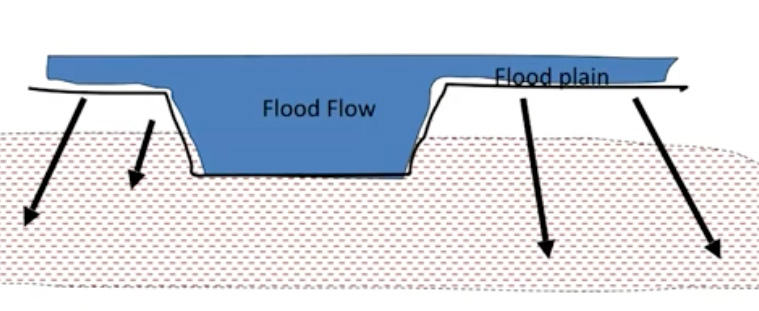
If the stream overflows its banks
the roots of plants in the riparian zone keep much of the soil from washing away, and the floodwaters can replenish the water table.
Arroyo cutting
Arroyo (Spanish) = creek / gully / stream / channel.
@ 2:06
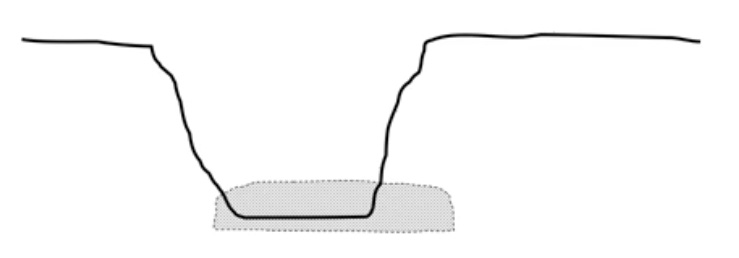
If riparian vegetation is lost (there's already not much in the dry Southwest!) and there's a particularly vicious storm, the sudden extra streamflow can severely erode the channel, or cut the arroyo deeper / wider.
Once the channel has been damaged like this, the water table can become significantly lower, and the roots of croops nearby may no longer be able to reach the moisture.
Prevention
Diamond mentions that some of the Anasazi built dams to avoid channel cutting. If the reservoir is large enough, like the Goshen Dam Pond, you can store water from heavy downpours, and gradually release it to the
channel (here, the Millrace) below the dam. This would protect the channel from ever getting large enough amounts of water to cut the channel further.
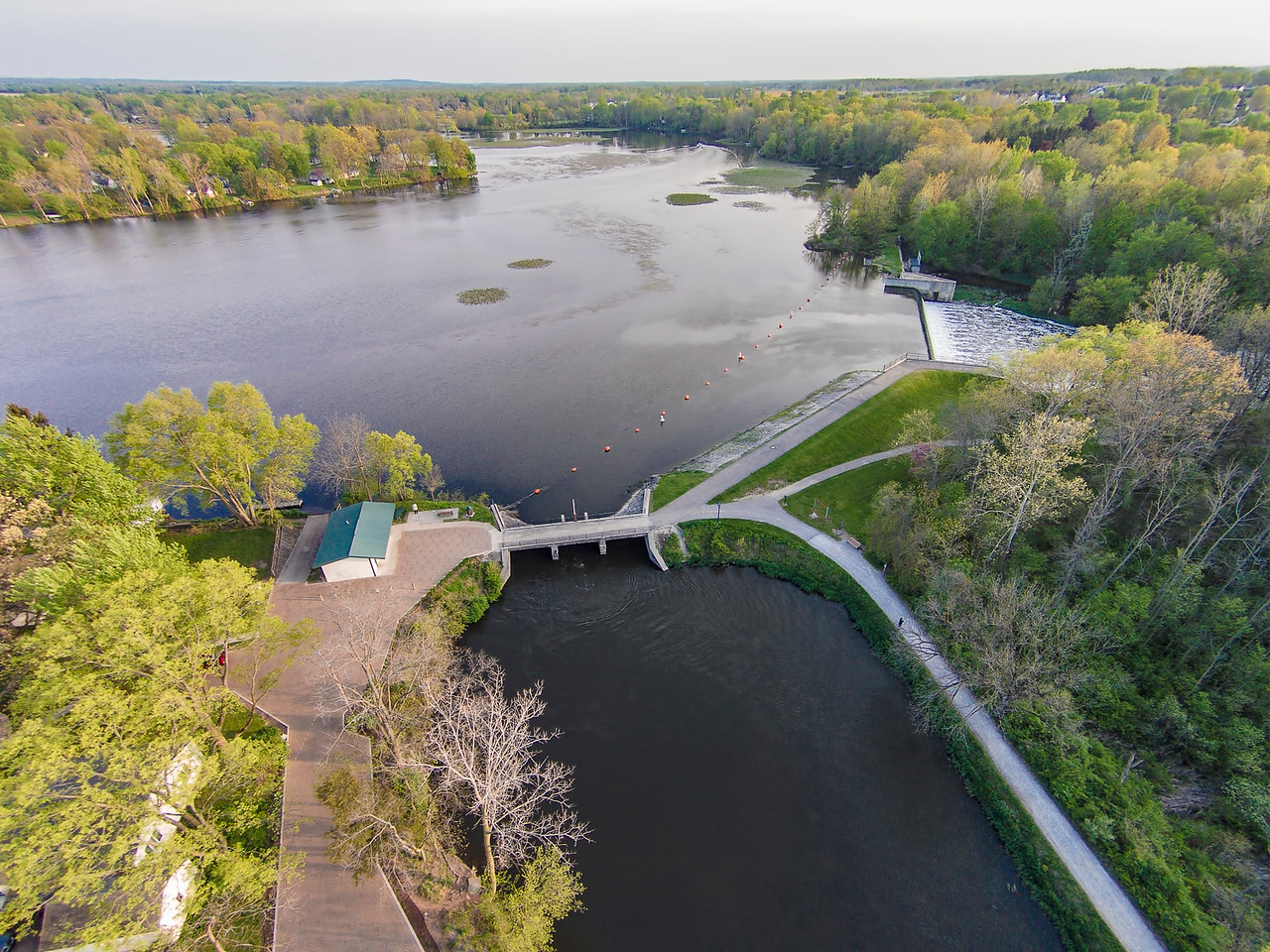
Branden Beachy Aerial portfolio
Reading questions
I'll ask you to include some pictures for this, so I'd suggest writing this up as either ...
- a Word file. You can upload it to Moodle to hand it in.
- or a Google Doc file. You can copy and paste the URL to hand it in. But also make sure to SHARE your google doc with me - paulmr@goshen.edu.
Read Chapter 4, The Ancient Ones..., and write answers to these reading questions.
- Find pictures of the following and include them in your file:
- A house or building in Chaco Canyon,
- A packrat midden,
- A diagram showing how "cross-dating" of tree rings works, to let you count back through many generations of trees, and reliably date well preserved tree trunks (even from hundreds of years ago).
- Diamond describes three different approaches to agriculture in the dry Southwest. Which approach did the Chaco Canyon inhabitants take?
- Diamond describes Chaco Canyon as an 'oasis'. In the early years when things were going well, how were the Anasazi of Chaco Canyon practicing agriculure?
- One contribution to their downfall was their water management. How did that contribute to their decline?
- Describe the evidence that scientists used to conclude that there were at one time plentiful woodlands of pinyon and juniper trees, and were able to date roughly when those woodlands disappeared.
- What's your understanding of how their civilization finally came to an end? Write a few sentences.
- Diamond claims that two related groups of Southwesterners, the Hopi pueblo and Zuni pueblo people, *did* manage to survive, for more than 2000 years, down until today. Do a little internet research on how they farm, and write a few sentences about what you find.
- Finally, write a short personal response (200-300 words) to this chapter. Include some question(s) that occurred to you while reading this, or something that you wondered about.